


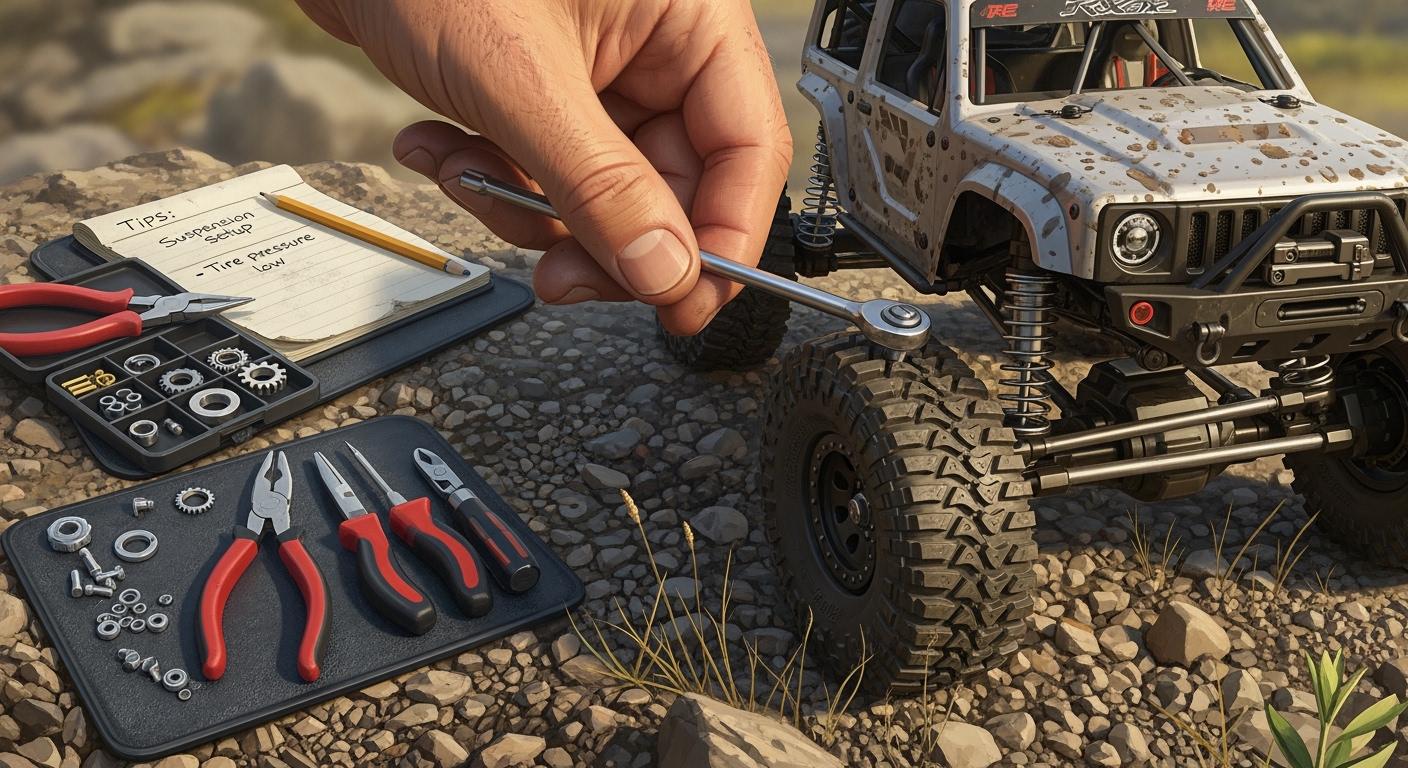
You can make your off-road rc car more fun with easy changes. If you learn how the car works and try it on new ground, you get better quickly. Many new drivers have trouble with using the throttle and knowing the land, but getting ready the right way helps you not mess up. You learn good skills if you drive a crawler by yourself or with friends. Setting up and tuning your rc rock crawler well makes it simple to use, so you have fun every time.
Key Takeaways
- Pick tires that match where you drive. Soft rubber is good for rocks. Tall lugs help in mud.
- Change your suspension to make your car more stable. Softer springs and lighter oil help your car grip rough ground.
- Keep your car balanced. Put more weight in the front to climb better and stay steady.
- Change your shock oil and gear settings. Thicker oil gives you more control. Lower gear ratios give your car more power for climbing.
- Clean your car often. Taking care of your crawler helps it work well and last longer.
Off-Road RC Car Setup
Tire Selection for Crawlers
You want your crawler to handle any terrain you throw at it. The right tire selection makes a huge difference in how your off-road rc car performs. Different tires work best on different surfaces. If you drive on rocks, you need tires with soft rubber and tight tread patterns. These give you better tire contact and help your crawler grip sharp edges. Muddy trails call for tires with tall lugs. These push mud away and keep traction strong. Sand needs a wide footprint and scooped tread to stop your crawler from sinking.
Here’s a quick look at common crawler tires and where they shine:
| Tire Type | Optimal Terrain | Key Features | Limitations |
|---|---|---|---|
| 1.9 Tires | Technical rock crawling | Flexibility, sharp steering | Lower clearance, mud accumulation |
| 2.2 Tires | Mud, sand | Tall lugs, increased clearance | Heavier, bulkier appearance |
| 1/10 Scale Tires | Standard crawlers | Balanced size, aftermarket support | Smaller compared to larger rigs |
| 1/8 Scale Tires | Extreme builds | High clearance, robust presence | Heavier, requires reinforced drivetrain |
When you pick crawler tires, think about the terrain you drive on most. If you want the best rc crawler setup, match your tires to your favorite spots. You get more grip and traction, and your crawler feels more stable. Tire selection is the first step to a great setup.
Suspension Adjustment
Suspension keeps your crawler steady and smooth. You can change how your rc rock crawler handles bumps and rough ground by adjusting the suspension. Softer springs soak up shocks and help your tires stay on the ground. Lighter oil lets your shocks move faster, which is great for ruts and jumps. If you raise the ride height, your chassis stays clear of rocks and roots. Toe-in adjustment helps your crawler go straight, even on bumpy trails.
Here’s a simple table to help you with your suspension setup:
| Suspension Setting | Effect |
|---|---|
| Softer springs | Soak up bumps and improve traction |
| Lighter oil | Allows shocks to react faster to ruts and jumps |
| Higher ride height | Keeps the chassis clear of obstacles |
| Toe-in adjustment | Enhances straight-line stability on rough ground |
You want to find the right balance with springs and pistons. This gives you the best rc crawler setup for high-grip tracks or loose dirt. Good suspension means your crawler stays stable and you get more control.
Weight Balance
Weight balance is key for every rc rock crawler. If you add weight to the front, your crawler climbs better and feels more stable. Too much weight in the back can make your crawler tip over. You want to spread the weight so your crawler stays upright and handles steep hills with ease.
Proper weight balance also protects your axle parts from wearing out too fast. When you set up your crawler, check the balance and move weight if you need to. This simple step boosts stability and makes your off-road adventures more fun.
Tip: Try adding small weights to the front axle or inside the wheels. Test your crawler on different terrain and see what works best for you.
With the right setup, you get more traction, better control, and a crawler that handles any challenge. Take time to adjust your tires, suspension, and weight balance. You’ll see your rc rock crawler perform at its best.

RC Rock Crawler Tuning
Tuning your crawler can turn a good drive into an awesome adventure. You get to control how your off-road rc car handles bumps, climbs rocks, and powers through tough terrain. Let’s break down two of the most important tuning steps: shock oil choices and gear settings.
Shock Oil Choices
Shock oil weight is a big deal for any rc rock crawler. The shock oil sits inside the shock and acts like a special fluid. It controls how fast the shock moves up and down. When you pick the right shock oil weight, you decide how your crawler reacts to every bump and dip.
Thicker shock oil weight slows down the shock. This gives you more control and helps your crawler stay steady on rocky terrain. Thinner shock oil weight lets the shock move faster. You get a quicker response, which is great for loose dirt or when you want your crawler to bounce back fast.
Here’s a quick look at common shock oil weights:
| Viscosity (WT) | Viscosity (cSt) |
|---|---|
| 20 | 200 |
| 30 | 300 |
| 40 | 400 |
You can see that shock oil weight comes in different numbers. Lower numbers mean thinner oil. Higher numbers mean thicker oil. Most crawlers use shock oil weight between 20 and 40 WT.
When you tune your shocks, you change more than just how bouncy your crawler feels. You also adjust:
- Damping resistance, which helps your crawler stay smooth over rough terrain.
- Traction, so your tires keep gripping the ground.
- How your crawler lands after jumps.
- Chassis roll, which means how much your crawler leans in turns.
- Handling over bumps and rocks.
If you want your crawler to climb better, try a thicker shock oil weight. If you want more grip on loose terrain, go with a lighter shock oil weight. You can always test different shock oil weights to see what works best for your favorite terrain.
Tip: Start with 30 WT shock oil weight for your rc rock crawler. It gives you a good balance for most terrain. You can go up or down if you want more control or faster shock action.
Gear Settings
Gear settings are another key part of tuning your crawler. The gears decide how much power goes to the wheels and how fast your crawler moves. You can change the gear ratio to match the terrain and your driving style.
If you like crawling over rocks and steep hills, you want a lower gear ratio. This gives your rc rock crawler more torque and better control. You can climb slowly and keep your grip, even on tricky terrain.
In rock crawling, lower gear ratios are generally preferred as they provide better torque delivery and control, which is essential for navigating challenging terrains.
Here’s what happens when you tune your gear settings:
- Your crawler gets more torque for climbing when you use a lower gear ratio.
- You get more top speed with a higher gear ratio, but you lose some crawling power.
- The right gear settings help your electronics stay cool and last longer.
- The axle type can change how your crawler handles torque and ground clearance.
You can use this simple list to remember how gear tuning works:
- Lower gear ratio = More torque, better for crawling, slower speed.
- Higher gear ratio = More speed, less torque, not as good for rocks.
- The right gear settings protect your crawler from overheating.
If you want your crawler to handle all kinds of terrain, start with a lower gear ratio. You get better control, more grip, and a smoother ride. Try different gear settings and see how your crawler reacts. Tuning is all about finding what feels best for you and your favorite terrain.
With the right shock oil weight and gear settings, you boost your crawler’s performance. You get more traction, better grip, and a crawler that can handle any challenge. Tuning makes your rc rock crawler feel like it was built just for you.
Driving Tips for Crawlers
Throttle Control
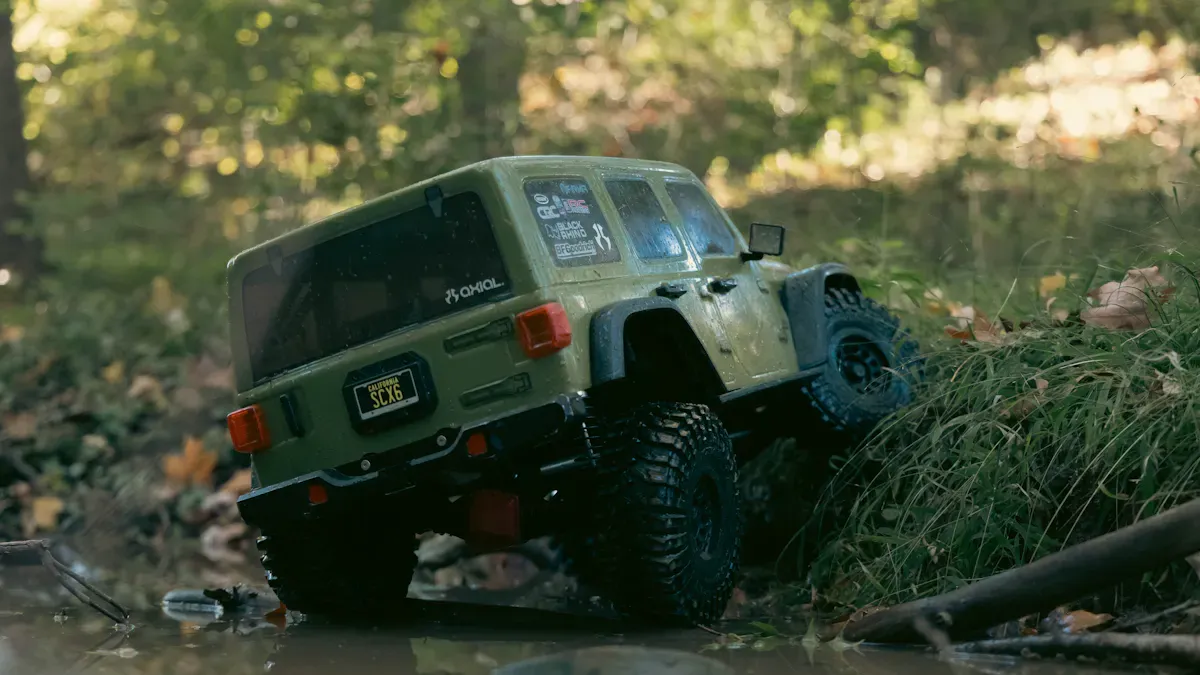
You want your crawler to move smoothly over tough terrain. Throttle control helps you keep traction and avoid spinning out. When you drive your off-road rc car up steep hills, you need to use gentle throttle. If you press too hard, your wheels spin and you lose grip. Try these driving techniques:
- Ease onto the throttle to keep your crawler steady.
- Hold a slow, steady speed when climbing obstacles.
- Use advanced throttle systems if your crawler has them. These help you modulate power and prevent wheel spin.
- Let the hill descent control manage your speed on steep declines. This keeps your crawler from skidding.
Throttle control makes your driving style match your driving style. You get better performance and more control over obstacles.
Obstacle Approach
Every crawler faces obstacles like rocks, logs, and jumps. You need smart driving techniques to get over them. Look ahead and plan your path. Approach obstacles at an angle, not straight on. This helps your crawler climb without tipping. Slow down before you hit jumps or bumps. Keep your wheels turning slowly as you crawl over obstacles. If you rush, you lose traction and control.
Tip: Watch how your crawler reacts to different terrain. Adjust your speed and steering to match the challenge.
You can use these steps for better obstacle approach:
- Spot the obstacle early.
- Choose the best path.
- Approach slowly.
- Keep steady throttle and steering.
- Adjust if your crawler slips or tips.
Steering Techniques
Steering is key for crawling over obstacles. Proportional steering lets you make small adjustments and keep control. You can turn tight corners and creep over obstacles with precision. Here’s a quick table to show how proportional steering improves your driving:
| Feature | Description |
|---|---|
| Fully Proportional Control | Lets you adjust speed and steering gradually for crawling |
| Tight Cornering | Helps your crawler turn sharp corners |
| Obstacle Navigation | Makes it easier to move over obstacles with precision |
Proportional remote control gives you more grip and control on rough terrain. You can steer your crawler around obstacles and keep your driving smooth. Try different steering techniques to see what works best for your crawler and terrain.
You get more fun and better performance when you practice these driving techniques. Your crawler handles obstacles, jumps, and rough terrain with ease. Keep practicing and you’ll see your control improve every time you drive.
Maintenance for Off-Road RC Cars
Cleaning Routine
Keeping your crawler clean makes every drive smoother. Mud and debris can stick to your off-road rc car after a wild session. You want to remove dirt without harming any parts. Here’s a simple cleaning routine you can follow:
- Take out the battery right away.
- Grab a soft-bristled brush and knock off big chunks of dried mud.
- Spray water lightly on non-electronic parts.
- Use compressed air to blow away leftover water and debris.
- Wipe everything with microfiber towels.
- Finish up with a plastic-safe cleaner on the suspension arms, shocks, and chassis.
You should clean your crawler after every run, especially if you drive in wet or muddy conditions. Dirt and moisture can wear out moving parts fast. Check out this quick table for cleaning frequency:
| Condition | Cleaning Frequency |
|---|---|
| Off-road, wet, or muddy | After every run |
Inspecting Parts
You want your crawler to stay reliable. After each session, clean off debris and check for oil leaks. Make sure mounting screws are tight and the suspension moves smoothly. Replace worn pivot parts right away. If you crash or notice shocks leaking, inspect and rebuild those parts. Bent arms need replacing as soon as possible.
Regular inspection helps you catch loose hardware before it causes bigger problems. If your suspension stops absorbing impacts, stress can hit the chassis, axles, and drivetrain. That can lead to breakdowns. Components loosen after repeated use, so checking them often keeps your crawler running strong.
Tip: Inspect your crawler after every few runs and right after any crash.

Lubrication
Lubrication keeps your crawler’s moving parts working well. For wheels, use light oil. For heavy load spots like diff outputs, light grease works best. Put a small drop of bearing oil on the bearings and spin them to spread the oil evenly. Don’t over-lubricate—too much can slow things down.
Proper lubrication stops premature wear in the drivetrain. If you have a high-powered crawler, inspect and lubricate parts regularly. This keeps your crawler efficient and extends its lifespan.
A well-maintained crawler gives you more fun and fewer repairs. Make maintenance part of your routine!
You can make your off-road RC car crawler more fun with easy steps. Try these helpful tips:
- Tune your engine to get better power.
- Do regular maintenance to keep it running well.
- Learn about parts like the chassis and tires.
Joining clubs and forums lets you meet others and learn faster:
| Aspect | How It Helps You Learn and Have Fun |
|---|---|
| Connection | Share ideas and make new friends |
| Skill Levels | Learn from both new and experienced drivers |
| Family-Friendly | Have fun with people of all ages |
Practice a lot and enjoy every adventure! 🚗
FAQ
How do I choose the best tires for my RC crawler?
You should match your tires to the terrain. Soft rubber works well on rocks. Tall lugs help in mud. Wide tires keep you moving in sand. Try different types and see what fits your favorite spots.
How often should I clean my RC crawler?
You need to clean your crawler after every muddy or wet run. Dirt and water can damage parts. Use a soft brush and a towel. Keep your crawler dry and ready for the next adventure.
What is the easiest way to improve crawling performance?
You can adjust your weight balance. Add small weights to the front axle. This helps your crawler climb better and stay stable. Test your setup on different terrain and make changes as needed.
Can I use my RC crawler indoors?
You can drive your crawler indoors if you have enough space. Avoid carpets and fragile items. Set up small obstacles like books or ramps. Indoor practice helps you learn throttle and steering control.


