


How to Pick the Right RC Off-Road Vehicle for Speed and Durability
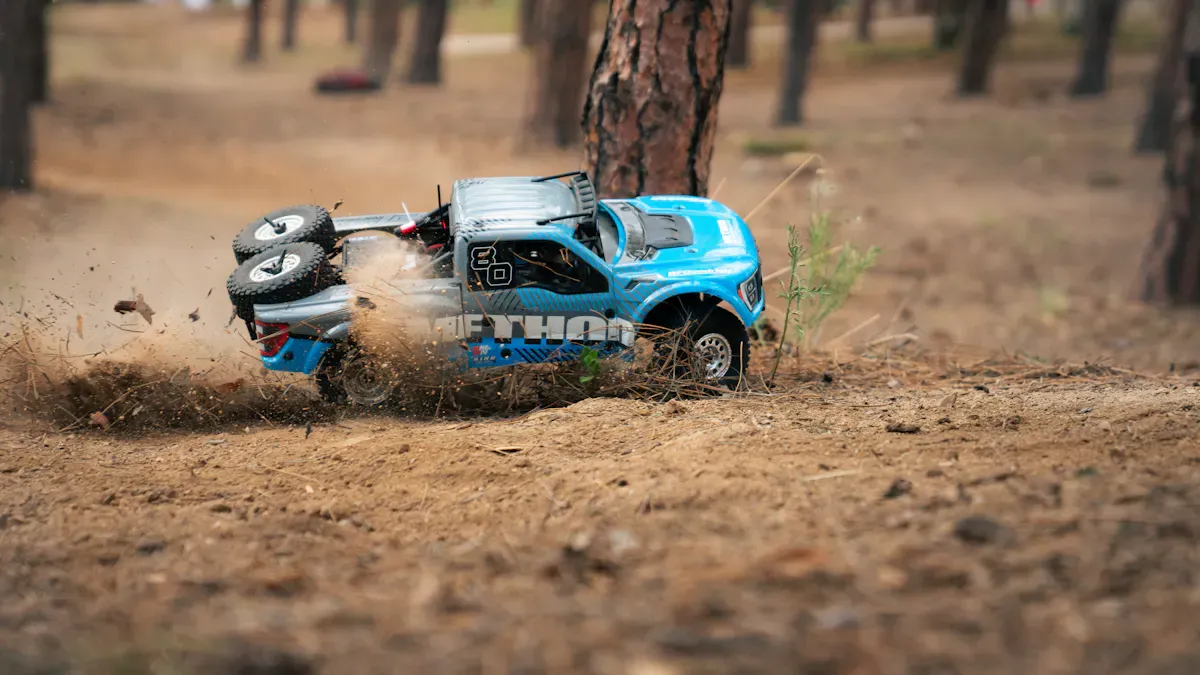
If you want the best rc off-road vehicle for both speed and durability, start by thinking about where you’ll drive it. Will you race across gravel, dirt, or grass? Each surface needs a different approach. You need to balance how fast your rc cars go with how tough they are. Look closely at the main features, compare different rc types, and decide what matters most to you. Picking the right rc can make every drive more fun.
Key Takeaways
- Think about where you will drive your RC vehicle. Different surfaces like gravel, dirt, or grass need special features for best results.
- Pick strong materials for your RC vehicle. Polycarbonate and reinforced steel are good choices. They help your RC handle hard hits and rough landings.
- Choose between 2WD and 4WD for your needs. 2WD is easier for new users. 4WD gives better grip and control on rough ground.
- Begin with a 1/10 scale RC vehicle. This size is a good mix of big and small. It is tough and has many parts you can find. This makes it great for beginners.
- Take care of your RC often. Clean it after every use. Check for loose parts to help it last longer and work better.
Key Features for RC Off-Road Vehicle Durability
Essential Speed Features
If you want your rc cars to go fast, you need to check more than just the motor. Speed depends on many parts working together. Here are the most important speed features:
| Feature | Description |
|---|---|
| Gearing | Changes motor RPM into wheel speed. It affects how fast your rc starts and its top speed. |
| Motor Performance | Motors with high RPM (over 30,000 RPM) need the right gearing for off-road driving. |
| Gear Ratios | Higher ratios give more power for rough ground. Lower ratios make your rc faster on smooth surfaces. |
| Pinion Gear Adjustment | Bigger pinion gears make your rc go faster. Smaller ones give more power and quick starts. |
You can make your rc cars faster by picking the right battery. LiPo batteries give more power and last longer. They help your rc cars speed up quickly. NiMH batteries last longer and are good for beginners. Always match your battery’s power to your motor so your rc works well.
Tip: For high-performance vehicles, use the right gearing and battery. This gives you the best mix of speed and control.
Durability Factors: Materials & Suspension
Durability helps your rc survive jumps, crashes, and rough landings. The materials in your rc matter a lot. Here is a table to compare them:
| Material | Durability Characteristics | Best For |
|---|---|---|
| Polycarbonate | Flexible, absorbs hits, resists cracks | Off-roading, custom builds |
| ABS Plastic | Stiff, keeps shape, not very flexible | Gentle play, structural parts |
| Nylon | Tough, handles friction and hits | Moving parts, repeated use |
| Aluminum Alloy | Light, strong, good for chassis | High-performance vehicles |
| Stainless Steel | Resists rust, tough | Screws, axles, outdoor use |
| Reinforced Steel | Very strong, adds weight | Heavy use, important parts |
To make your rc last longer, pick polycarbonate or reinforced steel for the body and chassis. These materials handle bumps and drops better than basic plastics.
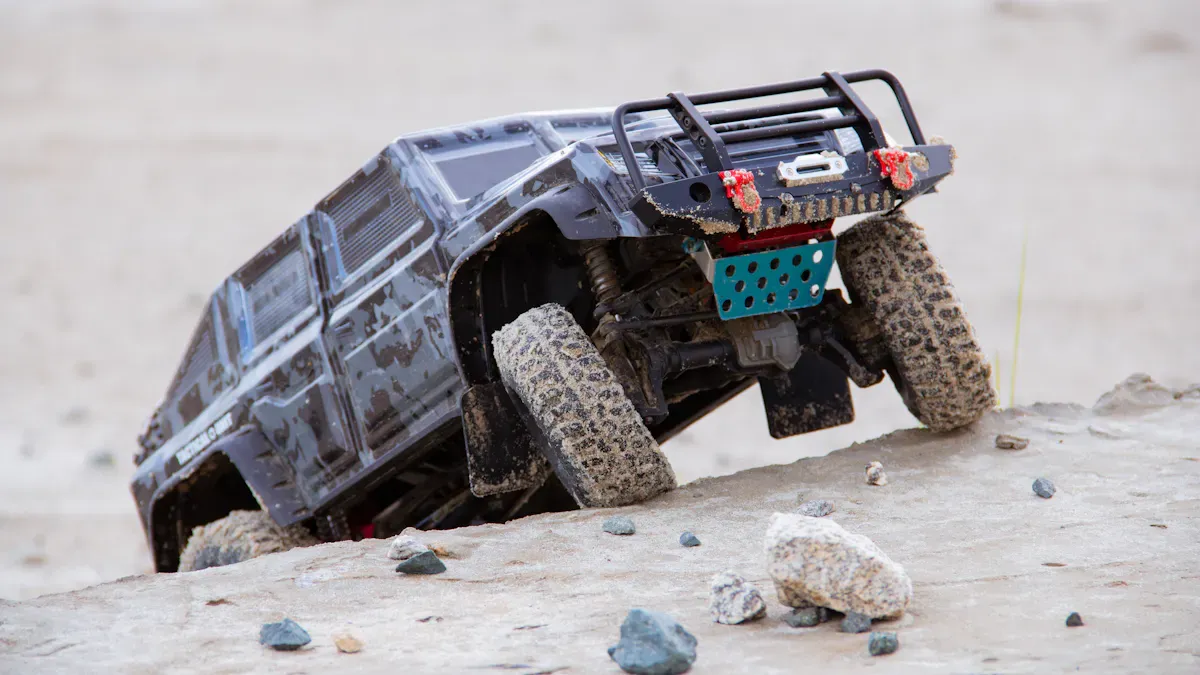
Suspension is important, too. Adjustable suspension lets you change your rc for different surfaces. A sway bar connects both sides and keeps your rc steady in turns. This means less body roll and better steering. You get more control, but sometimes less flex on rough ground. Good ground clearance helps your rc move over rocks and roots without getting stuck.
Note: Clean your rc after every drive. Dirt can wear down even strong materials. Check your tires and tighten screws to keep your rc in good shape.
Drivetrain & Scale Considerations
The drivetrain decides how your rc uses power and handles rough ground. You can choose between 2WD and 4WD. Here is a quick comparison:
| Feature | 2WD RC Cars | 4WD RC Cars |
|---|---|---|
| Cost | Lower, fewer parts | Higher, more parts |
| Maintenance | Simple, easy repairs | More upkeep, more moving parts |
| Traction | Not as good on loose or wet surfaces | Strong grip on most surfaces |
| Handling | Lighter, needs careful throttle use | Stable, easy to turn at speed |
| Speed Potential | Quick starts, lighter | High top speed, better control |
| Durability | Fewer parts to break | Heavier, but more stable landings |
| Best Use Cases | Beginners, smooth ground, budget builds | Racing, bashing, mixed or rough ground |
If you are new, 2WD rc cars are easier to fix and cost less. 4WD gives more grip and control, especially on rough ground. For most beginners, the 1/10 scale is the best size. This size gives you many choices, good durability, and lots of spare parts. You can find 1/10 scale rc cars for almost any surface or driving style.
Tip: Start with a 1/10 scale rc. It is easier to drive, fix, and upgrade as you learn.
Choosing the Right RC Vehicle Type
Buggy, Truck, or Truggy?
When you look at all the rc cars out there, you might wonder which type fits you best. You have three main choices for off-road vehicles: buggies, trucks, and truggies. Each one handles rough terrain and speed in its own way.
Here’s a quick table to help you see the differences:
| Vehicle Type | Scale | Characteristics | Terrain Suitability |
|---|---|---|---|
| Buggies | 1:10 | Speed and agility, versatile for dirt tracks and smoother surfaces | Good for mixed terrains |
| Truggies | 1:8 | Rugged durability combined with nimbleness, ideal for tougher terrain | Excellent for rough terrains |
Buggies give you great speed and quick moves. They work well on dirt tracks and grass. If you want to race or zip around, buggies are a solid pick. Truggies mix the best parts of buggies and trucks. They handle jumps and bumps with ease, so you can take them over rough terrain without worry. Trucks, like monster trucks or rock crawlers, focus on power and climbing. They move slower than high-speed racers, but they can go almost anywhere.
Tip: If you want to try different surfaces, start with a buggy. If you love big jumps and tough trails, a truggy or truck might suit you better.
Pros and Cons for Speed & Durability
Let’s break down what you get with each type when it comes to speed, durability, and how easy they are for beginners:
-
Buggies:
- Pros: Fast, agile, easy to control on flat or mixed ground.
- Cons: Not as tough as truggies or trucks on rocky paths.
-
Truggies:
- Pros: Strong, stable, and handle rough terrain well. Good mix of speed and toughness.
- Cons: Bigger size can make them harder to store or carry.
-
Trucks (including rock crawlers):
- Pros: Super durable, great for climbing and rough ground.
- Cons: Slower than buggies and truggies, not built for high-speed racers.
If you want a rc off-road vehicle that lasts, check out models like the Traxxas Bronco TRX-4. It has a steel frame and tough shocks, so it stands up to hard use. The Traxxas Bandit buggy also gets high marks for durability, but some parts may break if you push it too hard.
Choosing the right rc vehicle depends on what you want most—speed, toughness, or all-around fun. For beginners, buggies and truggies are usually easier to drive and fix. Trucks work best if you want to climb or bash through rough ground.
Build Quality & Trusted Brands
Construction Details to Check
When you pick out rc cars, you want them to last through jumps, puddles, and rough landings. You should always check a few key things before you buy:
- Look for a sealed chassis. This keeps water and dirt out of the important parts.
- Make sure connectors have covers or use heat-shrink tubing. This helps stop water from getting in.
- Check if the battery tray, suspension arms, and motor mounts have silicone sealant. This adds extra waterproofing.
- Use marine grease on gears and bearings. It protects against rust and keeps everything running smooth.
- See if the rc has strong materials like reinforced steel or aluminum in the frame.
If you want your rc cars to handle mud and rain, these details matter a lot. A well-built rc will keep running even after a splash or a crash.
Tip: After every run, wipe down your rc and check for loose screws. This simple habit can make your rc last much longer.
Recommended Brands & Models
You have a lot of choices when it comes to brands, but some stand out for their quality and support. Here are a few you can trust:
- Traxxas: Offers lots of models and great parts support.
- Tamiya: Known for cool designs and solid performance.
- HPI Racing: Makes tough rc cars that are easy to upgrade.
- Team Associated: Great for racing and quick handling.
- Losi: Combines speed and strength for both racing and bashing.
- Arrma: Famous for powerful rc cars that can handle rough use.
If you want to see some top models for speed and durability, check out this table:
| Model Name | Speed | Durability | Key Features |
|---|---|---|---|
| Tygatec Supersonic High Speed Hobby Grade RC Car | High | High | Powerful acceleration, precision handling, hobby-grade build |
| Tygatec Blast 1:8 Scale Hobby Grade RC Monster Truck | Moderate | High | Rugged design, high-torque motor, superior suspension |
| Tygatec VRX Cobra 1:8 Scale Hobby Grade RC Monster Truck | High | High | Precision control, advanced suspension system, rugged build |
You can find these rc cars online or at your local hobby shop. They give you a good mix of speed, toughness, and fun.
Balancing Speed and Durability
Trade-Offs & Prioritizing Needs
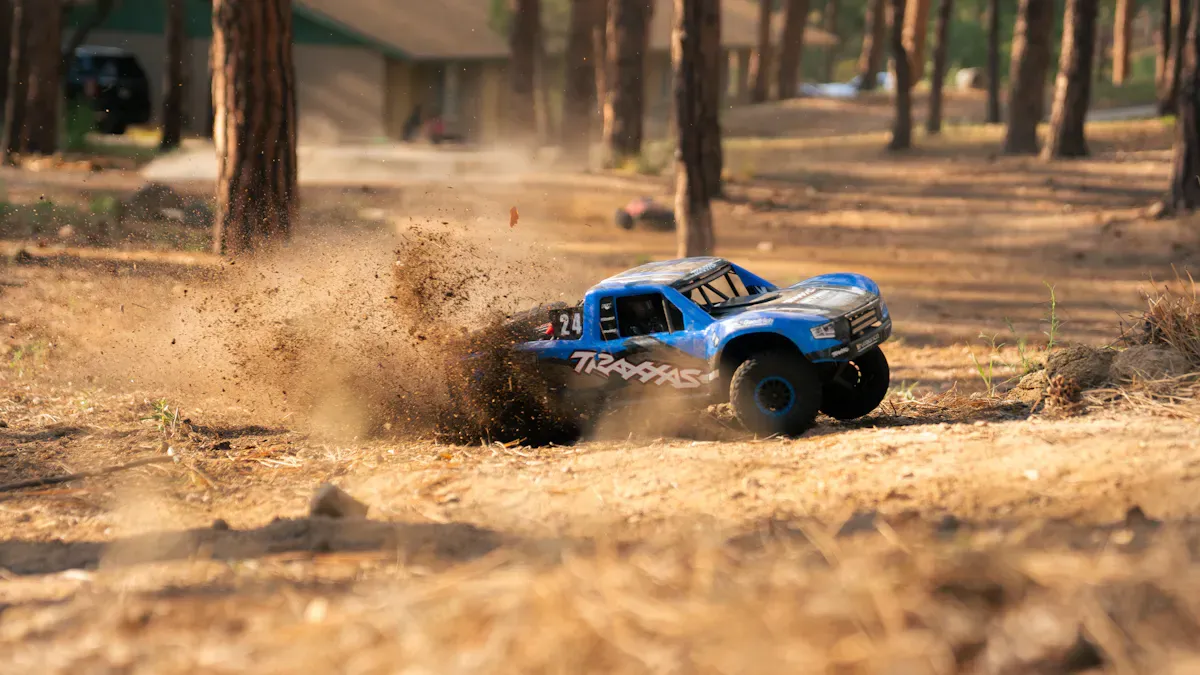
When you pick an rc off-road vehicle, you face a classic trade-off. You want your rc cars to go fast, but you also want them to survive tough hits. The best way to balance speed and durability is to think about where and how you plan to drive. If you love racing on dirt or grass, you need more speed. If you like bashing through rough terrain or climbing rocks, durability matters more.
Experienced hobbyists look at a few key features to get the right mix. Take a look at this table:
| Feature | Importance for Speed and Durability |
|---|---|
| 4WD systems | Maintains traction on loose or uneven ground |
| Suspension travel | Absorbs bumps and handles obstacles smoothly |
| Durable tires | Improves grip on dirt or grass |
| Ground clearance | Prevents chassis from getting stuck on rocks or debris |
You can see that 4WD systems and good suspension help your rc cars handle both speed and rough terrain. Durable tires and enough ground clearance keep your rc moving, even when the trail gets tough.
Tip: Ask yourself what you want most—top speed, toughness, or a little of both. Choosing the right rc vehicle means matching your needs to these features.
Customization for Improvement
You can boost performance and toughness with a few smart upgrades. Many off-road vehicles let you swap parts to get the feel you want. Here are some popular upgrades and what they do:
| Upgrade Type | Benefit Description |
|---|---|
| High-torque servo | Gives better steering and control at high speed |
| Weighted wheels | Lowers center of gravity for more stability |
| Brass portal covers | Adds weight for better balance on rocky trails |
| LED lighting | Lets you drive your rc cars after dark |
| Scale detail accessories | Makes your rc look more realistic and cool |
If you want more speed, try a high-torque servo for sharper turns. For better durability, weighted wheels and brass portal covers help your rc stay upright on rough terrain. LED lights are great if you like crawling at night, especially with rock crawlers.
You don’t have to upgrade everything at once. Start with one or two changes and see how your rc feels. Small tweaks can make a big difference in performance and fun.
Practical Buying Tips
Budget & Value
You do not have to spend a fortune to get started with rc cars. Many great options fit different budgets. If you want something simple for backyard fun, you can find models under $100. These rc cars work well for beginners and kids. They give you a taste of off-road action without breaking the bank.
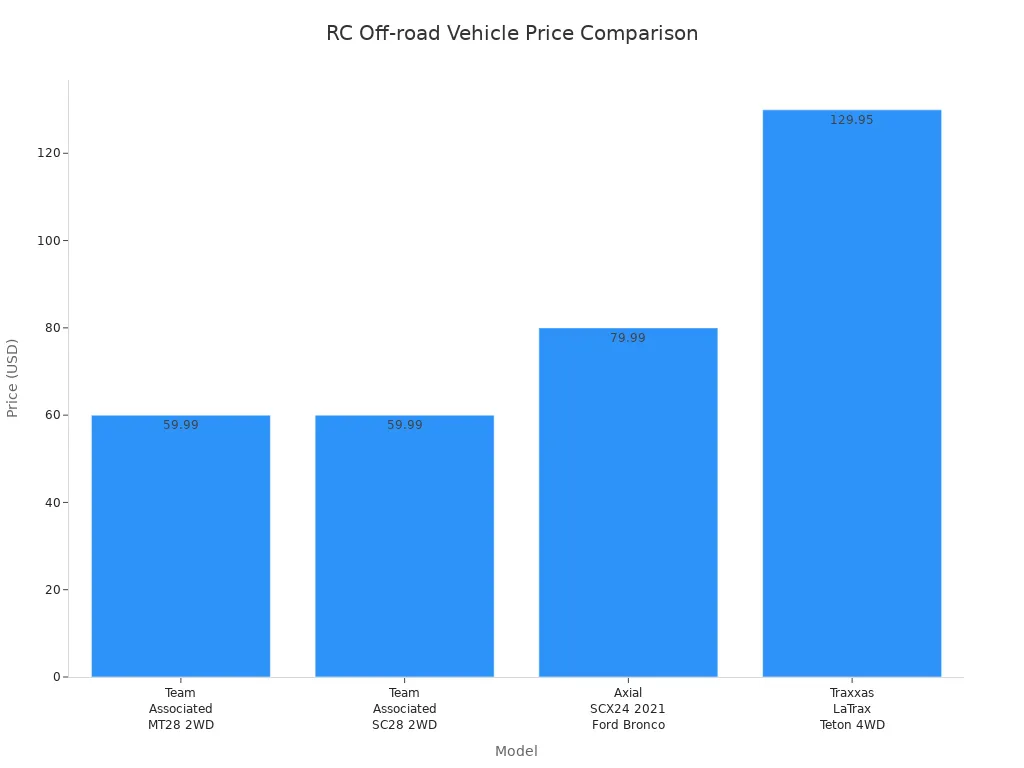
Take a look at this table to see how price and features compare:
| Model | Price | Best For |
|---|---|---|
| Team Associated MT28 2WD Mini Monster Truck | $59.99 | Beginners, kids, quick backyard fun |
| Team Associated SC28 2WD Short Course Truck | $59.99 | Compact short course style driving |
| Axial SCX24 2021 Ford Bronco Hard Body | From $79.99 | Crawling, obstacles, slow technical terrain |
| Traxxas LaTrax Teton 4WD Monster Truck | $129.95 | Stronger off-road 4WD option |
If you want better speed or more advanced performance, you might look at rc cars in the $100 to $200 range. These models often have stronger motors, better suspension, and more durable parts. You get more control and longer-lasting fun.
Tip: Start with a model that matches your skill level. You can always upgrade as you learn more about rc and what you enjoy most.
Where to Buy & What to Avoid
You can buy rc cars online or at local hobby shops. Online stores give you lots of choices and good prices. Local shops let you see the rc cars up close and ask questions. You might even get to test a model before you buy.
When you shop, watch out for deals that seem too good to be true. Some cheap rc cars break easily or do not have spare parts. Always check reviews and make sure the seller offers support. Trusted brands usually give you better quality and help if you need repairs.
Note: Avoid rc cars with no parts support or hard-to-find batteries. These can turn a fun hobby into a headache.
Choosing the right rc off-road vehicle gets easier when you know what to look for. You should check features like motors, suspension, and batteries. Compare different types to see what fits your style. User reviews and expert opinions can help you spot models with strong speed and durability. Always test your rc if you can. This helps you see how it handles bumps, wet ground, and rough trails. Take your time, do your research, and pick the rc that matches your needs best.
FAQ
What’s the best RC off-road vehicle for beginners?
You should start with a 1/10 scale buggy or truggy. These models are easy to drive, simple to fix, and have lots of spare parts. You can find many beginner-friendly options from Traxxas, Arrma, or Team Associated.
How do I make my RC car faster?
You can upgrade to a brushless motor, use a LiPo battery, or adjust the gearing. Make sure your drivetrain and tires can handle the extra speed. Always check your manual before making changes.
How do I keep my RC car durable?
Clean your RC after every run. Tighten screws, check for cracks, and use marine grease on moving parts. Choose models with reinforced frames and waterproof electronics for extra toughness.
Can I drive my RC car in the rain?
You can drive in light rain if your RC has waterproof electronics and sealed parts. Avoid deep puddles or mud that can damage the motor or battery. Always dry your RC after wet runs.


